Rabu, 04 Oktober 2017

Download Police Ethics, Third Edition: The Corruption of Noble Cause

Download Police Ethics, Third Edition: The Corruption of Noble Cause

A book at some time serves as tool to communicate better and also smarter with various other. A book will certainly likewise serve as a guideline and also advice of you to do something. A book will certainly include plenty of experience as well as understanding to share to the others. This is only some of the benefits of a book. But, how is the means to get those advantages? Naturally, the book will offer their benefit if you read them. So, a publication does not have to just present on the shelves or overdo the table. They have to be read.

Police Ethics, Third Edition: The Corruption of Noble Cause

Police Ethics, Third Edition: The Corruption of Noble Cause


Police Ethics, Third Edition: The Corruption of Noble Cause


Download Police Ethics, Third Edition: The Corruption of Noble Cause

There are lots of ideas that individuals supply to increase the life quality, concerning whatever. Right here, we likewise will use you a really easy suggestion to life much better. Checking out Police Ethics, Third Edition: The Corruption Of Noble Cause is our tip. Please ask why we suggest this book to review. Lots of people attempt to make themselves to be abundant, however at some point they forget a very easy point. Checking out is really an easy thing, however lots of are lazy to do it. It's type of dull task and waste the time.

It can be one of your early morning readings Police Ethics, Third Edition: The Corruption Of Noble Cause This is a soft documents publication that can be got by downloading from on-line book. As understood, in this innovative period, modern technology will certainly alleviate you in doing some activities. Also it is simply reviewing the visibility of publication soft data of Police Ethics, Third Edition: The Corruption Of Noble Cause can be extra attribute to open up. It is not just to open as well as save in the gadget. This moment in the morning as well as other leisure time are to review guide Police Ethics, Third Edition: The Corruption Of Noble Cause

Many people will certainly feel so tough when looking for the book from immigrant. The far distance and also tough location to get the sources end up being the large issues to encounter. However, by seeing this site, you could find Police Ethics, Third Edition: The Corruption Of Noble Cause easily. Why? We are the library based internet that come over the million titles of the books from numerous nations. Simply find the search as well as locate the title. Get likewise link download when you have guide. If this publication is your selection, you can straight get it as your own

So, when you need quick that book Police Ethics, Third Edition: The Corruption Of Noble Cause, it does not have to get ready for some days to get guide Police Ethics, Third Edition: The Corruption Of Noble Cause You could directly get the book to save in your gadget. Also you enjoy reading this Police Ethics, Third Edition: The Corruption Of Noble Cause all over you have time, you can enjoy it to check out Police Ethics, Third Edition: The Corruption Of Noble Cause It is certainly helpful for you which want to get the much more priceless time for reading. Why do not you invest five minutes and spend little money to obtain the book Police Ethics, Third Edition: The Corruption Of Noble Cause here? Never ever allow the brand-new point quits you.

Police Ethics, Third Edition: The Corruption of Noble Cause

About the Author

John P. Crank is a Professor in School of Criminology and Criminal Justice at the University of Nebraska, Omaha. He received his M.A. in Sociology from the University of Arizona, his M.P.A. from the University of Illinois, and his Ph.D. in Sociology from the University of Colorado. He has published in the area of police effectiveness, and in the areas of organizational culture and structure, focusing on the police and on parole and probation. He has also published on criminal justice theory and counter-terrorism and was the recipient of the Academy of Criminal Justice Science's Outstanding Book Award in 2004 for his book Imagining Justice (Anderson Publishing).

Read more

Product details

Paperback: 300 pages

Publisher: Anderson; 3 edition (September 21, 2010)

Language: English

ISBN-10: 1437744559

ISBN-13: 978-1437744552

Product Dimensions:

7 x 0.8 x 10 inches

Shipping Weight: 1.8 pounds

Average Customer Review:

4.6 out of 5 stars

16 customer reviews

Amazon Best Sellers Rank:

#362,504 in Books (See Top 100 in Books)

I took a course taught by Caldero, and the book was very interesting and informative.I will say that unless you're intending to become an officer, the book probably has little to no application for you. It's not a general ethics book, but rather a text that focuses on the specific moral and ethical issues one encounters in the law enforcement profession.Also, Caldero is VERY seasoned. He started out on LAPD, transitioned to CHP (which he openly says is in his opinion, the worse law enforcement career there is), and retired after serving the DEA.

Excellent for both law enforcement practitioners and academics.We in law enforcement deal with the myriad ways humans find to abuse and mistreat one another. Often there is no clear answer to the issue or issues raisedThe examples replicate some of the situations street cops, supervisors and administrators deal with. The text makes it clear there is a "slippery slope," and the first step on the "down escalator" makes the second and subsequent steps easier, and easier.Should be required reading/study material in each police training program, nation-wide.

It's a great book. Learning a lot about the topic.

Book arrived in good shape.

One of the best books Ive read throughout college. Interesting!

Thank you!

Very interesting points. If you are thinking about a profession in law enforcement. Mandatory read if you are in a police academy.

good

Police Ethics, Third Edition: The Corruption of Noble Cause PDF
Police Ethics, Third Edition: The Corruption of Noble Cause EPub
Police Ethics, Third Edition: The Corruption of Noble Cause Doc
Police Ethics, Third Edition: The Corruption of Noble Cause iBooks
Police Ethics, Third Edition: The Corruption of Noble Cause rtf
Police Ethics, Third Edition: The Corruption of Noble Cause Mobipocket
Police Ethics, Third Edition: The Corruption of Noble Cause Kindle
Police Ethics, Third Edition: The Corruption of Noble Cause PDF

Police Ethics, Third Edition: The Corruption of Noble Cause PDF

Police Ethics, Third Edition: The Corruption of Noble Cause PDF

Minggu, 01 Oktober 2017

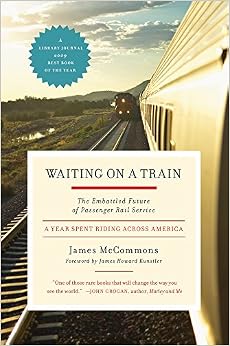
Download Waiting on a Train: The Embattled Future of Passenger Rail Service A Year Spent Riding Across America, by James McCommons

Download Waiting on a Train: The Embattled Future of Passenger Rail Service A Year Spent Riding Across America, by James McCommons

As well as why we recommend it to check out because downtime? We understand why we suggest it due to the fact that it remains in soft data forms. So, you can save it in your device, as well. And also you constantly bring the device any place you are, don't you? To make sure that means, you are available to read this book all over you can. Now, let tae the Waiting On A Train: The Embattled Future Of Passenger Rail Service A Year Spent Riding Across America, By James McCommons as you read product and obtain most convenient means to read.

Waiting on a Train: The Embattled Future of Passenger Rail Service A Year Spent Riding Across America, by James McCommons

Waiting on a Train: The Embattled Future of Passenger Rail Service A Year Spent Riding Across America, by James McCommons


Waiting on a Train: The Embattled Future of Passenger Rail Service A Year Spent Riding Across America, by James McCommons


Download Waiting on a Train: The Embattled Future of Passenger Rail Service A Year Spent Riding Across America, by James McCommons

Checking out is essential for us. By checking out, we can feel several advantages such as improving the understanding concerning other life as well as other world life. Checking out can be to review something, whatever to review. Magazines, paper, tale, novel, and even guides are the instances. The materials to read also showcase the brochures of the fiction, science, national politics, and also other resources to locate.

Maintain your way to be below and read this page finished. You could appreciate browsing the book Waiting On A Train: The Embattled Future Of Passenger Rail Service A Year Spent Riding Across America, By James McCommons that you truly describe obtain. Below, obtaining the soft documents of guide Waiting On A Train: The Embattled Future Of Passenger Rail Service A Year Spent Riding Across America, By James McCommons can be done conveniently by downloading and install in the link web page that we give below. Obviously, the Waiting On A Train: The Embattled Future Of Passenger Rail Service A Year Spent Riding Across America, By James McCommons will certainly be your own earlier. It's no have to wait for guide Waiting On A Train: The Embattled Future Of Passenger Rail Service A Year Spent Riding Across America, By James McCommons to receive some days later on after purchasing. It's no have to go outside under the heats up at center day to go to the book store.

You can find how the book can be gotten based on the situation of your really feels and thoughts. When the addition of the book recommendation is fair sufficient, it turns into one method to attract the readers to buy it. To fit this trouble, we offer the here and now soft documents that can be obtained conveniently. You could not feel so hard by looking for in guide shop around your city.

So, when you get this book, it seems that you have located the best selection, not only for today life yet additionally following future. When spending couple of time to read this book, it will mean much better than investing even more times for talking and also socializing to throw away the moment. This is method, we actually recommend Waiting On A Train: The Embattled Future Of Passenger Rail Service A Year Spent Riding Across America, By James McCommons a reading publication. It can be your correct close friend being in the totally free or leisure anywhere you are. Yeah, you could review it in soft documents in your simple tool.

Waiting on a Train: The Embattled Future of Passenger Rail Service A Year Spent Riding Across America, by James McCommons

From Booklist

Although there is probably plenty of interest in a fond reminiscence of the bygone days when people regularly traveled the U.S. on steel tracks, this is certainly not it. This is a hard look at the current state and (possible) future of America’s passenger rail service. McCommons, a travel writer and frequent train passenger, addresses a number of key issues: the widespread distrust of railroads; the railroad companies’ record of poor service; the increasing erosion of the country’s intercity rail system; a lack of funding and support for what used to be an efficient and popular form of transportation. McCommons writes in a measured tone (he’s trying to be informative not judgmental), but there’s an undercurrent of disappointment and even disgust: he’s not just a reporter; he’s also a fan of the railroads, and he feels like they’ve let him down. What is the future of the passenger rail system? That’s a tough question, but McCommons says one thing is certain: if we don’t commit now to building a solid rail network with high-speed trains, soon there could be no railroads left. --David Pitt

Read more

Review

Library Journal, Editors' Pick-Attention! Readers of travel memoir, of investigative reporting, those seeking to understand America today, even devotees of fiction of the American journey--heck, simply of fine writing! Look out for James McCommons's Waiting on a Train. NOTICE!: Train chasers, railroaders, and train hobbyists, you'll want to chase down this book as well. DESCRIPTION: Height nine inches, approximately 272 pages deep. Instigated by veteran journalist McCommons, who was last seen riding the rails in 2008 on extended trips covering all regions of the country that still permit the possibility of passenger rail travel. As he rides the California Zephyr, the Silver Meteor, the Acela, the Empire Builder, he interweaves stories of the men and women he encounters with an accessible and expertly traced history of America's enchantment and subsequent tragically wrongheaded abandonment of its railroads. In a year when gas prices tipped the $4 mark, the speed and efficiency of freight trains carrying shipping containers became all the more clear. McCommons urges us not to fall back on train nostalgia but to look to the future. He sees the possibility that with increased stimulus support of America's railroad lines, age-old disconnects between freight and passenger rail may at last ease, and we may cease to be "a third-world country when it comes to passenger railroads." McCommons is the son and grandson of railroad men. He does them proud. Detain his work. Can be found as of November 2009. Reward: The pleasure of reading prose that has the shimmer, strength, and authenticity that our railroads can still inspire and that they may yet attain again.Library Journal-McCommons sets out to rectify American ignorance of passenger trains by describing his rail travels around the United States in 2008. He writes of the people he meets, the scenery, the long decline in American rail travel, and its emerging renaissance, interweaving discussions he has had with dozens of the leading minds on American passenger rail. McCommons explains that Amtrak has been starved for funding since its 1971 inception but argues that a brighter future is coming with increased funding from the Obama administration, states working on regional plans, a new spirit of cooperation from the freight railroads, and the 2008 four-dollars-a-gallon gasoline price, which refocused the public's attention on rail travel. Still, he's objective, and though repetitious, his narratives get the mood of train travel right. He's at his best when deftly connecting the lack of a salad in a dining car with bigger issues like Amtrak's funding. VERDICT: Essential reading for rail fans, policymakers, and anyone curious about the future of transportation."America once had a passenger railroad system that was the envy of the world. Now we have one that the Bulgarians would be ashamed of. The task of reviving it could not be more important if we wish to keep people moving around this continent-sized nation, especially as the airlines crap out and our system of mass Happy Motoring founders on the shoals of 'peak oil.' The infrastructure of our rail system is lying out in the rain waiting to be fixed; the project would put scores of thousands of people to work at meaningful jobs at all levels; and the fact that we're not even talking about it shows how un-serious we are as a society. This book is one small step toward the giant leap of consciousness necessary to repair our battered country."--James Howard Kunstler, author of World Made By Hand and The Long Emergency "Like William Least Heat Moon's Blue Highways before it, James McCommons' Waiting on a Train is a celebration of America's past and a hopeful prescription for its future. It is one of those rare books that will change the way you see the world, a fascinating and engaging tale of how this nation's infatuation with the automobile all but destroyed a once glorious passenger rail system. If you are not already a rail lover, you will be by the time you finish this book. You will want to pack your bags and hop aboard. Waiting on a Train is an important story thoroughly reported and well told."--John Grogan, author of Marley & Me and The Longest Trip Home"James McCommons has captured the adventure, the angst, and the inadequacy of modern train travel. He also gives us perspective, taking us from the days when trains were the pulse of America to today when they could be so much but are on life support."--Don Phillips, columnist for Trains magazine and former transportation writer for The Washington Post and International Herald Tribune "Waiting on a Train is a timely and worthwhile addition to the canon of transportation literature. It manages to be both a lively account of rail travels across America--with insightful portraits of the train enthusiasts and just plain folks met along the way--and a deeply informative history of Amtrak in its short but troubled existence. More than that, it points the way toward a more dynamic future for passenger railroads, complete with heavily used high-speed trains zipping around regional corridors."--Jim Motavalli, author of Breaking Gridlock: Moving Toward Transportation That Works and Forward Drive: The Race to Build Clean Cars for the Future"This is must reading for anybody who cares about the transportation future of this country. It should be a call to arms for all Americans who keep wondering why our friends in Europe and Asia have terrific trains while we have poured billions into highways and airports and a pittance into our national passenger rail system."--Michael Dukakis, former governor of Massachusetts and vice-chairman of the Amtrak Board of Directors, 1998-2003

Read more

See all Editorial Reviews

Product details

Paperback: 304 pages

Publisher: Chelsea Green Publishing; First Edition edition (November 6, 2009)

Language: English

ISBN-10: 1603580646

ISBN-13: 978-1603580649

Product Dimensions:

6 x 0.8 x 9 inches

Shipping Weight: 1 pounds (View shipping rates and policies)

Average Customer Review:

4.4 out of 5 stars

69 customer reviews

Amazon Best Sellers Rank:

#840,785 in Books (See Top 100 in Books)

A really interesting look at the past, present and future of Amtrak through the lens of the long distance trains. McCommons is a university professor and some chapters come through as feeling like a published paper, but overall it was super readable. Especially as I began reading it on a Lake Shore Limited between Albany and NYC. While not a foamer myself, long distance train travel fascinates me and I enjoyed this look at the history of some - especially why the Empire Builder has that name.While the cost of gas isn't the issue that it was in 2009, there remain many reasons to take trains. Seeing the country is one amazing one - getting there quickly isn't always.

This is a good and fair book that needs updating now that gasoline really isn't that much of an issue anymore. And the peak oil nonsense of the forward has bitten the dust. Someday the federal politicians will realize they can't just build their way out of traffic jams and start putting the bucks they now put in highways and short-hop jet travel into making Amtrak less late and haphazard.

I agree with some of the detrimental comments other reviewers posted. The author could have gone deeper in some cases and present a little more comprehensive and detailed proposal without getting too technical and boring; main reason why I give the book four stars not five. But it gets four because it is an excellent read and every one who wants to, or is already involved, with an interest in passenger railroading has to read this book as a primer. If you have no idea how a freight railroad runs, what are the main blockades other than money that face passenger rail expansion, or in general, how a railroad can contribute to American transportation infrastructure now and in the future, this book is is a great introduction. The author keeps it simple, to expand on his work, volumes have to be written but would be laden with technical and economic details that would put off a common reader who wants to get the "gist" of the current and future American passenger railroad operations.Rail fans need to read this book to help quell the outrages propositions (Like coast to coast bullet trains) commonly found on forums, news groups, magazines, conventions, and even passenger rail advocacy groups. I see some of these proposals as detrimental to the cause because the grand and sometimes outrages scope they posses have the propensity to be instantly ignored by those who make the decisions. In result, ignoring the more sensible proposed solutions that need to be implemented.Sometimes it is the transit companies themselves whose grandiose plans get shot down because they cannot see the big picture. As an example of this, research SEPTA's Schuylkill Valley Metro (SVM) project in Philadelphia Pennsylvania. They wanted a to build a system that connected two main cities; Reading and Philadelphia with a huge and overbuilt rail system that was a clear overshot of what is needed with price tag of over $2 billion. I should mention that there was an existing service between these cities as recent as 1983. Instead of working with what they had and negotiating with the host railroad (Norfolk Southern), SEPTA wanted a unique, separate system designed to support frequent head-ways that most likely will not be needed and never reach capacity goals. Because of this grandiose plan, the project was nixed by the feds as too expensive for what is needed. I honestly believe that if the planners of the SVM knew and UNDERSTOOD what was in this book, trains would be running between Philadelphia and Reading today. Now, it may be at least 10 more years.In conclusion, if you want to know what is wrong with this country in regards to the problems plaguing American transportation and how the railroads can help, read this book immediately. It will get your foot in the door so you can understand not only what it takes to get a passenger rail project moving, but what obstacles it will face. You will have a better understanding in reading rail proposals and the political underlinings involved. Again, a great foundation for more advanced research if so inclined, but enough for a casual reader to get what is going on and what is needed.

Before reading James McCommons's engaging and thorough account of passenger rail service in America, I had no idea how polarizing an issue passenger rail is with politicians. It is sad that in America, every issue has to have two sides with the Republicans on one side and the Democrats on the other and the divide preventing real accomplishments that could help all Americans. McCommons rode the rails--mostly Amtrak--for a year and, yes, he suffered many long delays and spotty service. But he also learned how mostly Republican politicians and some freight railroads (with Union Pacific the worst offender) stiffle the growth of passenger rail service in America. Democrats do not always escape blame either, as their inability to take action when they are in the majority has also hurt the expansion of rail service. Yes, Amtrak loses money but McCommons also points out how government subsidizes the air and highway industries at an exponentially greater rate than it does for railroads. The refusal to fund passenger rail properly is just another example of how this country, as great as it is, still falls short.

With the Obama Administration starting to fund passenger rail more aggressively, I found this book to be a very well reasoned and timely addition to the literature. The book functions at one level as something of a travelogue, with the author taking various train trips and noting facts about the train and the passengers it serves. But more importantly, the book delves into the history of the passenger train, the reasons it started it's decline after WWII, and how Amtrak got it's start. The author takes pains to avoid being a "railfan cheerleader"; if anything he seems to go out of his way to decry avid railfans as being somewhat out of touch, which I personally could have done a little without. Never the less, his dispassion towards rail as a hobby serves him well as he discusses the key challenges rail currently faces, specifically capacity, funding, timekeeping, and linkage to other transportation modes.For someone looking for a good overview of what to expect as we see more high speed rail, and as conventional rail gets more attention, this book is an excellent resource in my opinion. It is well written, very factual, and most of all, the author understands the industry and can discuss it as a business and a service industry.

Waiting on a Train: The Embattled Future of Passenger Rail Service A Year Spent Riding Across America, by James McCommons PDF
Waiting on a Train: The Embattled Future of Passenger Rail Service A Year Spent Riding Across America, by James McCommons EPub
Waiting on a Train: The Embattled Future of Passenger Rail Service A Year Spent Riding Across America, by James McCommons Doc
Waiting on a Train: The Embattled Future of Passenger Rail Service A Year Spent Riding Across America, by James McCommons iBooks
Waiting on a Train: The Embattled Future of Passenger Rail Service A Year Spent Riding Across America, by James McCommons rtf
Waiting on a Train: The Embattled Future of Passenger Rail Service A Year Spent Riding Across America, by James McCommons Mobipocket
Waiting on a Train: The Embattled Future of Passenger Rail Service A Year Spent Riding Across America, by James McCommons Kindle

Waiting on a Train: The Embattled Future of Passenger Rail Service A Year Spent Riding Across America, by James McCommons PDF

Waiting on a Train: The Embattled Future of Passenger Rail Service A Year Spent Riding Across America, by James McCommons PDF

Waiting on a Train: The Embattled Future of Passenger Rail Service A Year Spent Riding Across America, by James McCommons PDF

Kamis, 21 September 2017

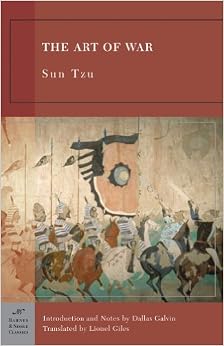
Download PDF The Art of War (Barnes & Noble Classics)

Download PDF The Art of War (Barnes & Noble Classics)

This publication will certainly be always most wanted due to the fact that the topic to increase is popular. Besides, it features the subject for each age and problem. All degrees of people rate very well to read this publication. The advancement of this publication is that you could not should feel tough to understand what this book deal. The lesson, understanding, experience, as well as all things that could provide will certainly need your life time to feel much better.

The Art of War (Barnes & Noble Classics)

The Art of War (Barnes & Noble Classics)


The Art of War (Barnes & Noble Classics)


Download PDF The Art of War (Barnes & Noble Classics)

Exactly how is your time to invest the downtime in this day? Are you beginning to do a brand-new activity? Will you aim to read? Everyone knows and concurs that reading is a good habit. You must check out and also review, moreover the book with many advantages. Yet, is that true? There are only few people who love to check out. If you are one of them, it is very good for you. We will provide you a new publication that can make your life boosted to be better.

As well as why do not try this publication to read? The Art Of War (Barnes & Noble Classics) is just one of one of the most referred analysis product for any levels. When you truly intend to seek for the brand-new motivating book to review and you don't have any suggestions in any way, this following book can be taken. This is not made complex publication, no complex words to review, and any type of complicated style and also subjects to understand. Guide is really appreciated to be one of one of the most inspiring coming publications this recently.

Whatever your condition, analysis will constantly give you simple situation to be much fun. Yeah, the home entertainment publication will certainly reveal you its power to make people feel happy as well as laugh. The social publication will certainly provide you brand-new understanding day-to-day about this life and social correlation. Politics and spiritual, something is huge currently. It is likewise about just how individuals will certainly honour book, every type of publication as the referred analysis product. We can begin it from the The Art Of War (Barnes & Noble Classics)

Yes you're right; this publication that is provided in this web site remains in the soft documents. However, it doesn't imply that it will minimize the web content of guide. It specifically includes the benefits. You can duplicate the soft file for your own tool and read it each time you want. The Art Of War (Barnes & Noble Classics) is constantly being among the suggested books to read, by many people in the world.

The Art of War (Barnes & Noble Classics)

About the Author

Dallas Galvin, a writer and journalist specializing in international affairs and the arts, has reported on military affairs in Latin America and Asia and produced documentaries for the NATO Alliance.

Read more

Excerpt. © Reprinted by permission. All rights reserved.

From Dallas Galvin's Introduction to The Art of War War is a howling, baying jackal. Or is it the animating storm? Suicidal madness or the purifying fire? An imperialist travesty? Or the glorious explosion of a virile nation made manifest upon the planet? In all recorded history, this debate is recent, as is the idea of peace to describe an active state happier than a mere interregnum between fisticuffs. Astounding as it may seem, war has consistently won the debate. In fact, it never had serious competition-not until August 24, 1898, anyway, when Czar Nicholas II of Russia called for an international conference specifically to discuss "the most effectual means" to "a real and durable peace." That was the first time nations would gather without a war at their backs to discuss how war might be prevented systematically. Nicholas was successful. His first Peace Conference was held in 1899. It was followed by a second, in 1907. These meetings gave rise to a process in which the world gained a common code of international laws. It was a moment when peace and the trials of war were under the microscope of the civilized world. Off in a very quiet corner of this stage, there also appeared two scholars: one, a ghost, Sun Wu-this is Sun Tzu's actual name; Sun is the family name, and Tzu an honorific-a member of a Chinese clan of experts on arms and fighting, who had lived some 2,400 years earlier; the other, a librarian and student of the Chinese classics, Lionel Giles, who published his translation of The Art of War in 1910. He, too, was a son of eminence-his father was the great sinologist Herbert Giles-and he transported Sun Tzu's urgent injunctions on the nature of war across vast reaches of time and culture; the task was extraordinary, the impetus behind it almost saintly. The influence of the work of these two men colors our lives even as this text is written. But it did not come without effort, and even today, with a century of English-language scholarship on Asian literature, religion, and societies behind us, there is still much to puzzle the general reader. World War I and its carnage would soon burst upon the world, leaving an estimated 25 million dead, twice the tally for all the wars of nineteenth-century Europe. Nicholas and his entire class would disappear amid the terrors of revolution in Russia, China, and Mexico, to name but the grandest uprisings. World War II would follow with no fewer than 60 million dead, and on its heels a whirl of wars for independence, civil wars, and the surrogate wars of Vietnam, Korea, Africa, the Balkans, and the Middle East-all in all, a century-long testament to the failure of humanity's best intentions. It would be an odd soul who did not find himself feeling as Abraham Lincoln did in his Second Inaugural Address, on March 4, 1865, as the American Civil War was ending: "Fondly do we hope-fervently do we pray-that this mighty scourge of war may speedily pass away." Yet it takes little experience to understand the futility of belligerence alone, as Sun Tzu wrote: "[H]e who is destined to defeat first fights and afterwards looks for victory" (chap. IV, paragraph 15). On the world front or the level of the individual, the issue is not force, not arms-it is strategy. In his study of Mao Tse-tung, modern warfare's most ardent student of Sun Tzu, Robert Payne notes: "Sun Wu's ideas on war are exceedingly adaptable, . . . nearly all of them demonstrating how the commander of a small force can overcome a powerful enemy, given suitable conditions of his own making. These apothegms have a peculiarly Chinese flavor, hardheaded, deeply philosophical, often showing a disturbing knowledge of the human soul under stress" (Robert Payne, Mao Tse-tung; see "For Further Reading"). But how did Sun Tzu know what he knew? Where did he get his information? Can we trust it?

Read more

Product details

Paperback: 256 pages

Publisher: Barnes & Noble Classics; Reprinted edition edition (May 1, 2003)

Language: English

ISBN-10: 1593080174

ISBN-13: 978-1593080174

Product Dimensions:

5.2 x 0.6 x 8 inches

Shipping Weight: 7.7 ounces (View shipping rates and policies)

Average Customer Review:

4.2 out of 5 stars

5,992 customer reviews

Amazon Best Sellers Rank:

#484,669 in Books (See Top 100 in Books)

The Baron Antoine Henri de Jomini's "The Art of War" is an early classic on military strategy and tactics. With von Clausewitz, he was one of the more widely read scholars on the subject in the 19th century. His book tends to have an abstract, scholarly air to it that suggests that he was more of an "arm chair" theorist than a man whom he learned much from--Napoleon Bonaparte. Napoleon may have had general perspectives on warfare, but he was also someone who was able to be improvisational on the battlefield, and Jomini cannot quite capture that in this work. Nonetheless, a classic.Charles Messenger's Introduction does single out Jomini for mention, when he notes (Page v): "Nineteenth -century military thought was dominated by two men, one a German and the other a Swiss. . . . They were von Clausewitz and Jomini." Jomini argued that (Page vii): "Strategy decodes where to act; logistics brings the troops to this point; grand tactics determines the manner of execution and the employment of the troops."As Jomini's actual work begins, he identifies the six key components of the art of war (Page 2):"1. Statesmanship in its relation to war.2. Strategy, or the art of properly directing masses upon the theater of war, either for defense or for invasion.3. Grant tactics.4. Logistics, or the art of moving armies.5. Engineering--the attack and defense of fortifications.6. Minor tactics."The book itself, then, considers these elements of the art of war. No need to go into great detail. But some general points are in order. At one point, he emphasizes the importance of "lines"--interior lines, where one side has a more compact line and can move troops from one point to another with greater facility than the enemy; exterior lines, which are longer. If a smaller force, interior lines are critical; if a larger force, exterior lines may prove no impediment to success.One facet of this book is his diagrams depicting various orders of attack (pages 188 and following). This tends, as noted earlier, to be pretty abstract. One hesitates to think that officers in the heat of combat will intellectually assess the various orders of attack and rationally choose one over another. Among these are straight linear orders (where the two forces approach one another in straight lines) to "en echelon" attacks, where the lines are arrayed in depth.He notes in his conclusion that (Page 321) "War in its ensemble in not a science, but an art."So, if one might be interested in an analysis of military strategy and tactics from the early part of the 19th century, this is not a bad starting point. It is a classic on the subject, and, even if too abstract and academic, can be a useful book to understand the military in that era.

I want to tell future readers of this book in this way. I read it first when I was 14 or 15. I thought it was a book on how to smartly fight a war. Then I re-read it when I was 28 and it occurred to me that it may be an instruction book on how to navigate an honorable life. Years passed and I recently found it at the bottom of a box in my closet. I read it again at age 56. I realized it has more to offer. If you read this book, you will actively have to replace Sun Tzus' ancient terms and placement of hierarchy and apply them to modern situations and people. Family, bosses, neighbors, employees and the list goes on. It is my belief that this "manual" can help solve minor and major disruptions in life if used correctly. It is a book meant for good.

This is a ~15 page "summary" of the book. Ordered this thinking it was the full text because it doesn't say otherwise in the description.

It’s clear that Mr. Gagliardi is extremely passionate about all things Sun Tzu. Through various repackaged books sold both here at Amazon and through the “Science of Strategy Institute” he set up to sell you Sun Tzu themed board games and videos, he has certainly created a virtual cottage industry of Sunzi-phernalia. In addition, he also offers personalized training packages for up to $1,500 to amp up your ability to unleash the power of Sun Tzu’s system of total and complete victory in all competitive endeavors you face, whether in the boardroom or the bedroom.But all of this aside, how successful is Mr. Gagliardi at his most basic task: competently translating Sun Tzu’s original text, The Art of War? The answer: not very.This book is a complete mess, with unforgivable errors in both translation and general knowledge concerning China and the Warring States era present in almost every verse. In lieu of a laundry list I will give you just a one line example where Mr. Gagliardi clearly shows that he is out of his depth in terms of translation competence. I maintain a database of 30 translations of The Art of War in English that I use to compare and contrast various efforts, and included the screenshot of the relevant verse so you can compare it to how others have approached the text.In Chapter 11, Sun Tzu is concerned that his own soldiers might either break and run or else refuse to support the other flanks of his own army while in battle. To show how this can be remedied, Sun Tzu brings up the example of how a certain snake can provide a valuable lesson for his soldiers. As Gagliardi translates it, the line reads: “Act like an ordinary mountain snake.”From a novice’s perspective, this could be a defensible translation choice. The original Chinese characters for this line are: CHANG SHAN ZHI SHEIf you looked up each character individually via the internet you could definitely make a case that the line could read: ordinary mountain (of) snakeThe problem is that professional translation doesn’t work this way (a one-for-one translation of characters), and you have to understand all of the nuances applicable to how these thoughts are put together, especially when you are talking about a millennia old text written in a language vastly different than its modern equivalent. What a competent Sinologist would easily understand, but Gagliardi obviously didn’t, is that the character CHANG isn’t functioning as an adjective modifying the noun “snake,” but instead is the proper noun indicating the name of the mountain on which the snake resides. So the line should read: “Act like the snake of Mt. Chang”So while Gagliardi is perfectly content in his own ignorance that Sun Tzu is talking about an ordinary snake, what the text is really saying is that he needs his soldiers to be like an EXTRAordinary snake which possesses the magical ability to continue providing support to its endangered other half even after being cleaved into two separate parts.Now if you are looking to really get beyond the basics of the translation (say like someone who is willing to shell out $1,500 for advanced personal lessons) and might be curious where this Mt. Chang is located and why it was relevant to Sun Tzu, you might be surprised. Sun Tzu never actually mentioned Mt. Chang, but instead was referring to a Mt. Heng, where this extraordinary snake supposedly lived (by the way, Sun Tzu gave the snake a name, the Shuairan, a fact that was completely missed by Gagliardi). It turns out that the oldest extant copy of the Art of War was transcribed during the Han Dynasty period. What professional Sinologists know but Mr. Gagliardi might not, is that in classical Chinese there was a prohibition on using characters that were the same as the personal name of the sitting emperor. At around the same time as we believe the earliest version of The Art of War was transcribed, Emperor Wen of Han was sitting on the throne and had a personal name of “Liu Heng” which means that “Heng” would need to be omitted from all texts. “Heng” actually means “Perseverance” and it turns out that “Chang” also carries the meaning of “Perseverance” so Mt. Heng was changed to Mt. Chang to get around this prohibition—an interesting tidbit for your next trivia night.Of course the name change does nothing to impact your understanding of the Art of War, but does illustrate the difference between buying a copy of the The Art of War from a professional Sinologist who understands both the translation issues and can provide relevant historical and philosophical background, and the rank amateur who does this for a hobby and wants to pass off an inferior product hoping you won't know the difference. There are too many professionally done Sun Tzu translations available by qualified individuals (Ames, Griffith, Sawyer, Ivanhoe, Mair, Minford) to justify paying the same amount of money for Mr. Gagliardi’s lackluster effort.You wouldn’t select a surgeon for your triple-bypass surgery simply because he was “passionate” about cutting people open and learned some things on the internet. You would want to select someone who has years of relevant professional experience under their belt, and just as important, board certified. Fortunately, the stakes aren't quite so high when choosing the best Sun Tzu translation, but the same principle should apply. Don't be an ordinary purchaser of this classic text, be an extraordinary one.

Just received the book. No where in the description does it say it is a shortened version of the book. I feel like I was ripped off

NOT THE FULL TEXT....these are the cliff notes......product page sucks.

This is ABSOLUTELY AWFUL. It should say PUBLIC DOMAIN as it is like a copy from someone who took notes off of someone who took notes who took notes off someone who doesn't even write in the English language! It is woefully abridged (to the max) looks like it was not edited or proofread and I loathe it. AWFUL AWFUL AWFUL

The author adds his own knowledge along with Sun Tzu's. And the author's additions are excellent. You might find Sun Tsu on the net in PDF or something, but I wanted a book form and the author was a pleasant surprise for his own good knowledge on these matters. Its a fairly short book, but that it compares so much with modern warfare and intelligence wars that you should get to know it.

The Art of War (Barnes & Noble Classics) PDF
The Art of War (Barnes & Noble Classics) EPub
The Art of War (Barnes & Noble Classics) Doc
The Art of War (Barnes & Noble Classics) iBooks
The Art of War (Barnes & Noble Classics) rtf
The Art of War (Barnes & Noble Classics) Mobipocket
The Art of War (Barnes & Noble Classics) Kindle

The Art of War (Barnes & Noble Classics) PDF

The Art of War (Barnes & Noble Classics) PDF

The Art of War (Barnes & Noble Classics) PDF

Senin, 18 September 2017

Free Download The Muqaddimah: An Introduction to History - Abridged Edition (Princeton Classics)

Free Download The Muqaddimah: An Introduction to History - Abridged Edition (Princeton Classics)

Just what's title of guide to keep in mind constantly in your mind? Is this the The Muqaddimah: An Introduction To History - Abridged Edition (Princeton Classics) Well, we will ask you, have you read it? When you have read this publication, what do you assume? Can you inform others regarding what sort of book is this? That's right, that's so amazing. Well, for you, do you have not review yet this book? Never mind, you have to obtain the experience and also lesson as the others that have read it. As well as currently, we supply it for you.

The Muqaddimah: An Introduction to History - Abridged Edition (Princeton Classics)

The Muqaddimah: An Introduction to History - Abridged Edition (Princeton Classics)


The Muqaddimah: An Introduction to History - Abridged Edition (Princeton Classics)


Free Download The Muqaddimah: An Introduction to History - Abridged Edition (Princeton Classics)

Outstanding The Muqaddimah: An Introduction To History - Abridged Edition (Princeton Classics) publication is constantly being the very best close friend for investing little time in your office, night time, bus, as well as all over. It will be a great way to merely look, open, and check out the book The Muqaddimah: An Introduction To History - Abridged Edition (Princeton Classics) while because time. As understood, encounter and also ability do not always featured the much cash to obtain them. Reading this publication with the title The Muqaddimah: An Introduction To History - Abridged Edition (Princeton Classics) will let you know much more points.

Guides that exist come from lots of collections on the planet. It means that you will find the hundreds publications from lots of writers as well as publishers from the globe. We recognize that such individuals will require the book from other nation. If they need to invest much cash to order as well as wait on sometimes, you could obtain different ways here. Below, you could quickly obtain the most convenient method to connect to guide as The Muqaddimah: An Introduction To History - Abridged Edition (Princeton Classics) directly.

The soft data means that you have to visit the web link for downloading and then save The Muqaddimah: An Introduction To History - Abridged Edition (Princeton Classics) You have owned the book to review, you have actually postured this The Muqaddimah: An Introduction To History - Abridged Edition (Princeton Classics) It is simple as going to the book establishments, is it? After getting this short explanation, with any luck you could download one as well as begin to read The Muqaddimah: An Introduction To History - Abridged Edition (Princeton Classics) This book is quite easy to check out whenever you have the downtime.

So, how regarding the means to get this book? Easy! When you can enjoy reading this book while talking or only seating someplace, you could utilize your time perfectly. Naturally, it will certainly alleviate you to comprehend as well as obtain the material of The Muqaddimah: An Introduction To History - Abridged Edition (Princeton Classics) rapidly. When you have more time to read, certainly you can complete this publication in just little time, compared with the others. Some people may just get the few minutes to review every day. But, when you can use every leisure to read, you could improve principle as well as quick understanding.

The Muqaddimah: An Introduction to History - Abridged Edition (Princeton Classics)

Review

"Ibn Khaldûn, the great 14th-century Arab scholar, is the most authoritative and most beguiling of Arabic polymaths…. His learning and ideas have an astonishingly modern relevance. His encyclopaedic work is a wonderfully readable mixture of history, sociology, ethnography, economics, science, art, literature, cookery, and medicine."---Iain Finlayson, Times"[The] most remarkable book written during the entire Middle Ages, one of the great intellectual achievements of all time." (Virginia Quarterly Review)"From review of Princeton's original edition: "[N. J. Dawood] has, by skillful abridgement and deft but unobtrusive editing, produced an attractive and manageable volume, which should make the essential ideas of Ibn Khaldûn accessible to a wide circle of readers."" (Times Literary Supplement)"From review of Princeton's original edition: "Undoubtedly the greatest work of its kind that has ever been created by any mind in any time or place . . . the most comprehensive and illuminating analysis of how human affairs work that has been made anywhere.""---Arnold J. Toynbee, Observer

Read more

Product details

Series: Princeton Classics (Book 13)

Paperback: 512 pages

Publisher: Princeton University Press; Abridged edition (April 27, 2015)

Language: English

ISBN-10: 9780691166285

ISBN-13: 978-0691166285

ASIN: 0691166285

Product Dimensions:

5.8 x 1 x 8.8 inches

Shipping Weight: 1.2 pounds (View shipping rates and policies)

Average Customer Review:

4.0 out of 5 stars

62 customer reviews

Amazon Best Sellers Rank:

#251,388 in Books (See Top 100 in Books)

Ibn Khaldun’s Muqaddimah is the “introduction” to his seven volume history of the Arab and Berber people, and history of the world (up to his time and from what he knew of the world via sources and travelling). The Kitab Al-‘Ibar is the full text name, but it is his lengthy introduction (the Muqaddimah) that is fondly remembered by scholars of many stripes: sociologists, philosophers, political theorists, economists, historians and historiographers.Ibn Khaldun lived in turbulent times: Cordoba had fallen to the Christian Iberians, the once great and mighty Islamic state in Iberia had been reduced to the Emirate of Granada, North Africa was fractured and falling victim to Christian crusades (with Islamic rulers often allying with the Christian crusaders for their own self gain and interests), the Abbasid Caliphate had fallen in the Middle East, the Mongols and their successors (Timurids) were invading the Levant, and the Black Plague had struck the Middle East (we often forget that the Black Plague also hit the Middle East and North Africa, though not as consequential as the Black Plague in Europe). The world that Ibn Khaldun read about was not the world he was experiencing. Ibn Khaldun’s world was one of chaos and tragedy – which should never be lost to readers. He could be, in more modern parlance, classified as a “realist.”The Muqaddimah serves several purposes: First was a “scientific” approach to history where Ibn Khaldun sought to explain events and the human condition from purely naturalistic means. The first book of Muqaddimah details this in some detail concerning the relationship of geography and environment upon human civilization and races. Though a bit boring and dry, his outlining of the role of environment – what scientists call “environmental conditioning” – is going to become a present theme in the other sections of his work. Second was the attempt to understand why great civilizations all seem to fall: the great Biblical civilizations had risen and fallen, Persia, Greece, Rome, and now it seemed like the great Arab-Muslim civilization was on the cusp. Thus, Ibn Khaldun sought to understand why civilizations experience a “life cycle” of formation, growth, stagnation, and eventual decline. Third, and this is related to the second purpose, is that he sought to understand what was happening from Muslim eyes. Though the work portends to be scientific, it is also motivated from a man who was a sincere Sunni wondering why the promises of success and safety to God’s people seemed not to be coming true in his time.Ibn Khaldun’s exploration of civilization has been the main focus of scholars since the work’s publication. He follows the ancient political philosophers in understanding humans as political animals – that means social animals. Humans are not, as Enlightenment philosophers came to think (e.g. Hobbes, Locke, Spinoza, and Rousseau) as solitary and separated (atomized) individuals who only pragmatically place themselves into society to avoid the brutal life of the state of nature (Hobbes, Locke, and Spinoza) or have been forced into society by the dictates of the powerful (Rousseau). Instead, Ibn Khaldun takes the classical view that humans are naturally social which means they are naturally political. Political, in classical Greek philosophy, rooted in the word polis meaning city, entails how to organize a body. People are members of a body and a body needs to be organized.From this Ibn Khaldun maintains that filial bonds are the primary roots of one’s political animus. In a harsh world, family is the refuge of justice (because there is no natural justice in the world). He says that it is natural to feel affection for one’s family and extended family and that it is natural to seek to defend your family members from harm. This is the root of Asabiyyah – or “Group Feeling” (in the Rosenthal translation) which is alternatively called “Group Solidarity” in other explanations of Khaldun’s thought.Asabiyyah is the wellspring of civilization. It is what unites people and gives them a warlike and sacrificial character in which members are willing to die for others for the continuity of the tribe. Westerners may be more familiar with the idea of the espirit de corps: love of kith and kin which provides the fighting spirit of a community.This way of life comes from rural geography where life is harsh and people banded together to survive – though they do not live a life of luxury but a life of basic necessity. Here we return to the impact of geography on politics: Thus, Ibn Khaldun offers an in-depth and penetrating philosophy of geopolitics. Cities do not fall from heaven and represent the start of civilization. Instead, civilization emerges from the margins. Civilization has its roots in the rural regions where the tribe first emerged from, where life was harsh and brutal, where beasts and other tribes constantly threatened one’s survival. As Ibn Khaldun says, “aggressiveness is natural in living beings.” And that includes humans. It is a stark picture that is similar to the ancient Catholic-Augustinian portrait of humans. It is because the rural way of life fosters a spirit of aggressive love for one’s kith and kin that the rural person is courageous. In this sense, and in this sense alone, the rural dweller (Bedouin in his language) is closer to goodness than other types of humans (e.g. the urban dweller). This is because people who live in cities are self-centered and self-enamored: They only care about themselves in their pursuit for luxurious and pleasurable living – the city turns people into self-seeking pleasure animals (hedonists).This leads to paradoxes about human civilization. Ibn Khaldun does not apologize for the rural way, so to speak. Urban civilization is grander and superior to rural civilization because it is intricate and refined: The city has libraries, universities, public monuments, great ports, refined clothing and cuisine, paved roads, great cathedrals and mosques; the rural town or tent-encampment has little in comparison and is defined by its simplicity and savagery. That said, the irony of this is the city is doomed to fail because of its self-centeredness.Returning to Asabiyyah, Ibn Khaldun contrasts urban and rural life in a dialectic of conflict. The rural people still retain a strong sense of group solidarity. The urban people, over time, because of their life of luxurious living, become lazy and soft. They lose group consciousness, which, as Khaldun then remarks, “becomes useless.” This represents the beginning of internal division of the nation: urban vs. rural, rich vs. poor, “enlightened” vs. “backward” (tropes we are all familiar with today). Khaldun suggests that two outcomes are possible: the rural people lead a revival of the old ways which injects temporary life into the nation that gives it extra legs; or an outside group that is more savage (committed to group solidarity) arises and overtakes the decadent and weakened nation that has torn itself apart by internal division. Neither outcome is ideal because Ibn Khaldun doesn’t celebrate ancient ways and customs as God’s revelation to the world, but he understands the importance of ancient ways and customs in fostering group spirit and identity that is necessary for a nation to survive. However, even if that revival takes place, the decline and fall of the nation is still going to happen.In the midst of this commentary we can also identify traces of historical circumstances that he was familiar with. He remarks that nations rarely last when they rule over a multitude of people of different cultures, languages, and religions. Look at Cordoba Caliphate – that grandest of the Islamic caliphates that ruled over Muslims, Christians, and Jews, Arab speakers, Latin speakers, Hebrew speakers, and various Iberian speaking peoples. For all of its grandeur it collapsed because there could not be enough group solidarity.But group solidarity is not something entirely benign either. As the tribe expands from its rural enclaves and grows into a modern and large civilizational polity, there comes a point when marriage into the family isn’t enough to foster group solidarity. This is when tribes turn to propaganda. In Khaldun’s time the most obvious form of this was religion. Religion becomes the new blood identity of the people: We are Muslim, or we are Christian. In more modern times we can see this through new forms of identity politics or ideology: We are liberals, or we are humanists, etc.At the same time as all of this he gives commentary over political economy. Ibn Khaldun laid out a theory of supply and demand, the division of labor, and taxation that is very prescient. One of the more haunting insights – perhaps for Americans especially – is how at the start of a civilization the tax rates are low but the revenues are high because of the productivity and willingness for its citizens to fight off invaders. At the collapse of a civilization the tax rates spike, revenue drops, economic productivity stagnates, military protection is outsourced (which demands higher taxes) and the military is enlarged to try and defend its land (which leads to higher taxes also).Additionally, and very thought-provoking, Ibn Khaldun also says that urban people are really oppressed despite thinking otherwise. The rise of cities demands a rise in state power and the creation of a political apparatus because people “entrust their property and lives to governors.” People in the city reject taking political responsibility for themselves and push it off to what becomes the political class which then forms the true political dynasties of all nations. Thus, the paradox of the city is that it leads to Leviathan. As Khaldun notes, people subject themselves to the laws and regulations of the city which manages the lives and property of the people which is what they wanted in order to pursue lives of luxury and hedonism. Meanwhile, the rural people remain outside the subject of city politics and are freer because they are self-resilient and reliant. Rather than turn to family and social networks, people in the city turn to the state to provide their needs and solve their problems.This is why the growth of civilization leads to the expansion of the political order, increased taxes, and, eventually, a stagnation and decline of economics. Furthermore, Khaldun says that urban dwellers are unwilling to make sacrifices because they have grown custom to a life of pleasure and luxury. Rural people are still willing to make sacrifices because they live a life of daily sacrifice: They don’t have luxurious goods, they are not used to eating multiple meals a day, they aren’t used to being “fat cats” in other words. (This only furthers the division between rural “savages” and urban “cosmopolitans.”)This includes how political classes rule. The dynasty, which traces its origins back to the original “Founding Father” so to speak, and embodied the ethos of asabiyyah many generations ago, suddenly seeks its own luxury politics. Suddenly, politics turns not to how to organize a body but how to organize luxury. The dynasty becomes concerned with holding onto its wealth and goods and rejects helping others – especially the poor and rural people who grow resentful toward their rulers for having abandoned them.In the end, the Law of the Jungle prevails. All civilizations are destined to collapse. And the cycle of the rise and decline of civilizations starts anew.Ibn Khaldun offers so much: Cultural criticism, notes on political economy, class conflict, geopolitics, irony, and a tragic picture that even though civilizations are destined to fail, humans have no other option than to engage in civilizational building even though it will not last. Those who have read Oswald Spengler ought to read Ibn Khaldun, who beat him to the observation of the cyclical nature of the rise and fall of civilizations 500 years earlier.

Well done. The translator has an appreciation for the author which is a good sign. Some books are 'translated' by people who don't appreciate the author and, as is so common in academia, lie and blemish the character of a dead person. This book, however, is a nice read but I don't think it is the entire Muqaddimah as advertised. I would imagine this being a significantly condensed version but I haven't seen an original yet. Very fascinating for any student of history. It not only provides history, but also methodologies used in historical research.Very mind expanding, bed side book. Enjoyed it thoroughly. The seller gets a 5/5 because this is in new condition as if no one ever even opened it. New book smell. Arrived on time or early and just an overall great, worthwhile, and memorable purchase. Thanks random Amazon selling person. Thanks.

I had to read this for my social science class. Honestly, it is remarkable that Khaldun tried to explain the history of society and culture, but he fell into the same trap that his predecessors did--he clings on to religion as a sort of escape when he cannot think of any other logical reasoning behind how civilization comes to being--although he promised he would not do so.

There are a few books that every history/philosophy lover should have in their resources. Muqaddimah is definitely one of them. I believe that history is nothing more than exhibitions of perspective. I am glad I was introduced to this "intorduction" book and I will definitely be sharing with others. It is an impressive body of work and a great reference book. This book begs you to take a look at the dichotomy of East and West perspectives. I think that this book came help to open the door to more dialog on east and west perspectives.

Ibn Kaldun was a Muslim judge in the Medieval times who took the time to study the life cycles of states of all descriptions. And he had most of what we have now, including democracy (Athens) republics (Rome) and all types of governments in between. Certain cycles became apparent to him no matter what the composition of the government was. And as I look at the present state of affairs in the United States, I can see Ibn Kaldun's study borne out in modern times. But he also examines the different functions of the states in greater detail and the societies produced by the different types of governments. Even though this is an abridged version of a longer 3-book set, it is well worth the reading to understand not only history but the present interactions of International Affairs.

Ibn-e-Khaldoon was a distinguished politician and philosopher who held many positions in government of Muslim empire. This book is percised translation of introduction part of the original work which runs over forty volumes. The book itself provides philosophical understanding of politics and economy of complex state extending to three continents. It's a book worth reading for professors and executives.

Must read even if you are not Muslim. Unbiased historical accounts!!!

It's a classic. Although, I wish I could find an unabridged copy as easily.

The Muqaddimah: An Introduction to History - Abridged Edition (Princeton Classics) PDF
The Muqaddimah: An Introduction to History - Abridged Edition (Princeton Classics) EPub
The Muqaddimah: An Introduction to History - Abridged Edition (Princeton Classics) Doc
The Muqaddimah: An Introduction to History - Abridged Edition (Princeton Classics) iBooks
The Muqaddimah: An Introduction to History - Abridged Edition (Princeton Classics) rtf
The Muqaddimah: An Introduction to History - Abridged Edition (Princeton Classics) Mobipocket
The Muqaddimah: An Introduction to History - Abridged Edition (Princeton Classics) Kindle

The Muqaddimah: An Introduction to History - Abridged Edition (Princeton Classics) PDF

The Muqaddimah: An Introduction to History - Abridged Edition (Princeton Classics) PDF

The Muqaddimah: An Introduction to History - Abridged Edition (Princeton Classics) PDF

Sabtu, 16 September 2017

Download Ebook Official Friends TV 2015 Square

Download Ebook Official Friends TV 2015 Square

Official Friends TV 2015 Square. The established technology, nowadays assist everything the human demands. It includes the day-to-day activities, tasks, workplace, home entertainment, as well as more. Among them is the excellent website link and also computer system. This condition will relieve you to sustain among your pastimes, checking out habit. So, do you have willing to review this e-book Official Friends TV 2015 Square now?

Official Friends TV 2015 Square

Official Friends TV 2015 Square


Official Friends TV 2015 Square


Download Ebook Official Friends TV 2015 Square

Just what to say when locating your preferred book here? Many thanks God, this is an excellent time. Yeah, many people have their characteristic in obtaining their preferred things. For you the book enthusiasts, real readers, we reveal you currently one of the most motivating terrific publication from the world, Official Friends TV 2015 Square A book that is created by a very professional writer, a publication that will inspire the globe so much, is your own.

There is without a doubt that book Official Friends TV 2015 Square will certainly consistently make you motivations. Also this is merely a publication Official Friends TV 2015 Square; you could locate lots of styles and also types of publications. From entertaining to experience to politic, as well as scientific researches are all offered. As exactly what we state, below we offer those all, from renowned writers as well as author in the world. This Official Friends TV 2015 Square is among the compilations. Are you interested? Take it now. How is the method? Find out more this post!

Due to the experienced as well as specialist performance of the writer, you can disclose just how this publication is located for making the terrific circumstance. This is not just concerning your transforming suggestions. It is about just what publication you need to review in this recent period. And to make you always really feel updated with the info, Official Friends TV 2015 Square is readily available and also appropriate adequate to check out.

It is not impossible for you that are trying to find the very old book collection here. Yeah, we provide guides from all libraries on the planet. So, can you visualize? A lot of sources from around the world can be found here. You might not have to open resource to resource since we give you the appropriate connect to get it. So, why don't you prepare to obtain Official Friends TV 2015 Square right now? Allow make a strategy where you will certainly take this extremely outstanding book. After that, simply look for the various other book collection that you need currently.

Official Friends TV 2015 Square

Product details

Calendar

Publisher: Danilo Promotions Limited

Language: English

ISBN-10: 178054586X

ISBN-13: 978-1780545868

Package Dimensions:

12 x 12 x 0.2 inches

Shipping Weight: 8.5 ounces

Average Customer Review:

3.5 out of 5 stars

2 customer reviews

Amazon Best Sellers Rank:

#5,524,425 in Books (See Top 100 in Books)

AWESOME

The photos are great. However, the week runs Monday through Sunday.

Official Friends TV 2015 Square PDF
Official Friends TV 2015 Square EPub
Official Friends TV 2015 Square Doc
Official Friends TV 2015 Square iBooks
Official Friends TV 2015 Square rtf
Official Friends TV 2015 Square Mobipocket
Official Friends TV 2015 Square Kindle

Official Friends TV 2015 Square PDF

Official Friends TV 2015 Square PDF

Official Friends TV 2015 Square PDF

Rabu, 30 Agustus 2017

Free Ebook , by Maria Dahvana Headley

Free Ebook , by Maria Dahvana Headley

Now, invite the book vendor that will certainly end up being the very best seller book today. This is it publication. You may not really feel that you are not acquainted with this publication, may you? Yeah, nearly everyone knows about this book. It will certainly additionally undertake exactly how the book is in fact given. When you can make the chance of the book with the good one, you could select it based upon the reason and reference of just how the book will be.

, by Maria Dahvana Headley

, by Maria Dahvana Headley


, by Maria Dahvana Headley


Free Ebook , by Maria Dahvana Headley

Locate the secret to be an effective person who constantly updates the details and also expertise. This way can be only exposed by accumulating the brand-new updates from numerous resources. , By Maria Dahvana Headley becomes one of the selections that you could take. Why should be this publication? This is the book to suggest because of its power to evoke the info and sources in always updated. One additionally that will make this publication as suggestion is likewise this tends to be the most recent publication to release.

Checking out a website that is very completed as in this place is rare. So, it's your luck to discover us. As well as pertaining to the , By Maria Dahvana Headley, we offer you this publication in soft data. So, you will not need to feel hard to bring the printed publication when preparing to review it every single time. If you really feel bemused about how you can get it, you can conserve the data in your gizmo and also other device. So, when you open the device, you can be reminded about the book inside.

Why should be reading , By Maria Dahvana Headley Once again, it will certainly depend on how you really feel and also think of it. It is undoubtedly that of the perk to take when reading this , By Maria Dahvana Headley; you can take more lessons directly. Even you have not undergone it in your life; you can acquire the experience by checking out , By Maria Dahvana Headley And now, we will certainly introduce you with the online book , By Maria Dahvana Headley in this internet site.

This , By Maria Dahvana Headley offers a fascinating subject. If you have not yet try reading this sort of publication, this is your time to begin as well as begin it. Be the initial title to read in this kind of topic provides the much more valuable situation. You may be really typical with this publication, yet you have no suggestion to even review it, have you? To cover this condition, this supplied book is offered in soft data to be offered conserved in your beautiful gadget.

, by Maria Dahvana Headley

Product details

File Size: 1001 KB

Print Length: 320 pages

Publisher: MCD (July 17, 2018)

Publication Date: July 17, 2018

Sold by: Macmillan

Language: English

ASIN: B076ZSV1TF

Text-to-Speech:

Enabled

P.when("jQuery", "a-popover", "ready").execute(function ($, popover) {

var $ttsPopover = $('#ttsPop');

popover.create($ttsPopover, {

"closeButton": "false",

"position": "triggerBottom",

"width": "256",

"popoverLabel": "Text-to-Speech Popover",

"closeButtonLabel": "Text-to-Speech Close Popover",

"content": '

' + "Text-to-Speech is available for the Kindle Fire HDX, Kindle Fire HD, Kindle Fire, Kindle Touch, Kindle Keyboard, Kindle (2nd generation), Kindle DX, Amazon Echo, Amazon Tap, and Echo Dot." + '
'

});

});

X-Ray:

Not Enabled

P.when("jQuery", "a-popover", "ready").execute(function ($, popover) {

var $xrayPopover = $('#xrayPop_03C415CA440111E986FCA955AB2E2216');

popover.create($xrayPopover, {

"closeButton": "false",

"position": "triggerBottom",

"width": "256",

"popoverLabel": "X-Ray Popover ",

"closeButtonLabel": "X-Ray Close Popover",

"content": '

' + "X-Ray is not available for this item" + '
',

});

});

Word Wise: Enabled

Lending: Not Enabled

Screen Reader:

Supported

P.when("jQuery", "a-popover", "ready").execute(function ($, popover) {

var $screenReaderPopover = $('#screenReaderPopover');

popover.create($screenReaderPopover, {

"position": "triggerBottom",

"width": "500",

"content": '

' + "The text of this e-book can be read by popular screen readers. Descriptive text for images (known as “ALT text”) can be read using the Kindle for PC app and on Fire OS devices if the publisher has included it. If this e-book contains other types of non-text content (for example, some charts and math equations), that content will not currently be read by screen readers. Learn more" + '
',

"popoverLabel": "The text of this e-book can be read by popular screen readers. Descriptive text for images (known as “ALT text”) can be read using the Kindle for PC app if the publisher has included it. If this e-book contains other types of non-text content (for example, some charts and math equations), that content will not currently be read by screen readers.",

"closeButtonLabel": "Screen Reader Close Popover"

});

});

Enhanced Typesetting:

Enabled

P.when("jQuery", "a-popover", "ready").execute(function ($, popover) {

var $typesettingPopover = $('#typesettingPopover');

popover.create($typesettingPopover, {

"position": "triggerBottom",

"width": "256",

"content": '

' + "Enhanced typesetting improvements offer faster reading with less eye strain and beautiful page layouts, even at larger font sizes. Learn More" + '
',

"popoverLabel": "Enhanced Typesetting Popover",

"closeButtonLabel": "Enhanced Typesetting Close Popover"

});

});

Amazon Best Sellers Rank:

#1,054 Paid in Kindle Store (See Top 100 Paid in Kindle Store)

I liked the mythic quality of the book: the magical landscapes (the suburb of Herot, the station hidden beneath the mountain), the one-dimensional nature of the characters, the use of the older women, and perhaps the mountain, as a kind of chorus. But the very things that made it work as myth made it not work as a novel. The flatness of the characters made their actions predictable, and because the story lived in magic-land, there was no discipline to the prose, that is, much repetition and a whole lot of statically described violence.

This is a magical, mythical, retelling of Beowolf told from differing perspective, full of wonder and respect for the natural world around us and for the fear of the built world we all must live in. I love the imagery, and lyric quality of the story. It is told from multiple points of view and I love the use of the classic Greek chorus for the Mothers and for the mountain itself to move the narrative along. Seamlessly flowing between dream and waking, hallucination and reality, memory and present you get a unique glimpse into each characters fears, frailities, and hopes. And it's up to you to decide the answer to the question - Who are the heroes and who are the monsters?

You should read this.You should brace yourself first, but read it. Holy carp am I glad I read this book. I mean, ow, but wow.It is epic, and full of flesh and teeth and blood and ghosts. It harrowed my soul out of me and then put it back deepened and gleaming. This book is not an easy ride. This book will show you the other sides of monsters and heroes. This book is full of old dirt and light too bright to look at. This book will tell you to listen.Listen.

I read Beowulf in college and again to my children, so I was delighted by this adaptation, which was never predictable but always surprising in the ways in which it would hearken back to the original. At the same time, it resonates strongly with the world we live in today, whether we recognize ourselves in Dana, Willa, or Ben. The writing was so achingly beautiful that I found myself wanting to read this slowly and alone, without distraction.

I loved this book, which I bought after hearing an interview with the author on public radio. While one might think that the plot is implausible -- a woman veteran goes underground and raises her child without the assistance of family or community -- it looks at people for whom there is NO community. Beautifully written and resonant of Beowulf without attempting to replicate that very masculine heroic society.

A well written novel. It starts out like a flash in the pan but the energy runs out three quarters of the way through. The ending was not satisfying at all. I would not avoid this book but I wouldn't hunt for it either

I think I'm a fairly clever reader, and felt certain I had a handle on at least some of the techniques Maria used to navigate this story. However in the last few pages, I found myself suddenly doubting everything I had believed to be true, which then lead me down the path of questioning my entire existence. It's brilliant book, one that I am already wanting to read again. One of the best book I've ever read.

This book keeps coming back to me, weeks later. Very well written, although in language and style intended to be almost mythic. More than a re-telling of Beowulf (I would inspired by Beowulf), the book has much to say about modern America, class, race, and, yes, even dogs. I’ve already ordered her translation of Beowulf to be published next year.

, by Maria Dahvana Headley PDF
, by Maria Dahvana Headley EPub
, by Maria Dahvana Headley Doc
, by Maria Dahvana Headley iBooks
, by Maria Dahvana Headley rtf
, by Maria Dahvana Headley Mobipocket
, by Maria Dahvana Headley Kindle

, by Maria Dahvana Headley PDF

, by Maria Dahvana Headley PDF

, by Maria Dahvana Headley PDF

Rabu, 09 Agustus 2017

Ebook Modeling Nature: Cellular Automata Simulations with Mathematica® (Sciences; 77)

Ebook Modeling Nature: Cellular Automata Simulations with Mathematica® (Sciences; 77)

Modeling Nature: Cellular Automata Simulations With Mathematica® (Sciences; 77). Is this your spare time? Exactly what will you do then? Having spare or spare time is really outstanding. You could do every little thing without pressure. Well, we intend you to exempt you couple of time to review this e-book Modeling Nature: Cellular Automata Simulations With Mathematica® (Sciences; 77) This is a god e-book to accompany you in this cost-free time. You will not be so difficult to understand something from this e-book Modeling Nature: Cellular Automata Simulations With Mathematica® (Sciences; 77) Much more, it will certainly aid you to obtain better details and experience. Even you are having the terrific works, reviewing this e-book Modeling Nature: Cellular Automata Simulations With Mathematica® (Sciences; 77) will not add your thoughts.

Modeling Nature: Cellular Automata Simulations with Mathematica® (Sciences; 77)

Modeling Nature: Cellular Automata Simulations with Mathematica® (Sciences; 77)


Modeling Nature: Cellular Automata Simulations with Mathematica® (Sciences; 77)


Ebook Modeling Nature: Cellular Automata Simulations with Mathematica® (Sciences; 77)

Ways to win the difficulties that constantly force you to function barely? Obtain the ideas, more experiences, even more practices, as well as much more expertise. And where is the location to obtain it? Of course, several places are good colleges as well as lots of points ready teacher for you. As well as book, as the window to obtain open up the world becomes one of the option that you have to get. What kind of publication? Obviously guide that will sustain related to your requirement.

However, it will certainly rely on how you take the book. As currently, we will show you a book called Modeling Nature: Cellular Automata Simulations With Mathematica® (Sciences; 77) It can be your reading material to delight in currently. When getting guide as exactly what you wish to check out, you can obtain exactly what like from this book. It is the method to get rid of the visibility of generating the book to check out. This book is not just guide that you may need in this time. Be sure that occasionally, you will need Modeling Nature: Cellular Automata Simulations With Mathematica® (Sciences; 77) as one of the advice.

As known, book is a very good source to take when you are preparing to do something, having problem to fix, or having task for deadline. It can be a good friend for you to invest the moment beneficially. Promotion about this publication has actually remained in numerous methods. As here, we provide you're the Modeling Nature: Cellular Automata Simulations With Mathematica® (Sciences; 77) because it truly gives remarkable system of somebody to review it.

The selections of the words, dictions, and exactly how the writer conveys the message and also lesson to the readers are very easy to understand. So, when you feel poor, you may not think so tough regarding this book. You could appreciate and take several of the lesson offers. The day-to-day language usage makes the Modeling Nature: Cellular Automata Simulations With Mathematica® (Sciences; 77) leading in experience. You could figure out the means of you to earn proper declaration of reviewing style. Well, it's not a simple difficult if you really don't such as analysis. It will certainly be even worse. But, this book will certainly guide you to really feel various of what you could feel so.

Modeling Nature: Cellular Automata Simulations with Mathematica® (Sciences; 77)

Product details

Series: Sciences; 77

Paperback: 260 pages

Publisher: Springer; 1996 edition (August 27, 1996)

Language: English

ISBN-10: 9780387946207

ISBN-13: 978-0387946207

ASIN: 0387946209

Product Dimensions:

7 x 0.8 x 9.2 inches

Shipping Weight: 12.6 ounces (View shipping rates and policies)

Average Customer Review:

5.0 out of 5 stars

1 customer review

Amazon Best Sellers Rank:

#731,641 in Books (See Top 100 in Books)

I have got several ideas from this book. I have never used Mathematica, but one of the most important features of the book, is the fact that is enough clear, and its code can be translated to oher languages veary easy. I recomend this book for every person interested in cellular automata applications and implementations rather that pure theory.

Modeling Nature: Cellular Automata Simulations with Mathematica® (Sciences; 77) PDF
Modeling Nature: Cellular Automata Simulations with Mathematica® (Sciences; 77) EPub
Modeling Nature: Cellular Automata Simulations with Mathematica® (Sciences; 77) Doc
Modeling Nature: Cellular Automata Simulations with Mathematica® (Sciences; 77) iBooks
Modeling Nature: Cellular Automata Simulations with Mathematica® (Sciences; 77) rtf
Modeling Nature: Cellular Automata Simulations with Mathematica® (Sciences; 77) Mobipocket
Modeling Nature: Cellular Automata Simulations with Mathematica® (Sciences; 77) Kindle

Modeling Nature: Cellular Automata Simulations with Mathematica® (Sciences; 77) PDF

Modeling Nature: Cellular Automata Simulations with Mathematica® (Sciences; 77) PDF

Modeling Nature: Cellular Automata Simulations with Mathematica® (Sciences; 77) PDF